14 November 2026
Rotator Cuff Injury: Causes, Symptoms and Treatment
Shoulder pain can make simple daily activities such as lifting objects, reaching overhead, dressing and sleeping uncomfortable. One common cause of shoulder pain is a rotator cuff injury.
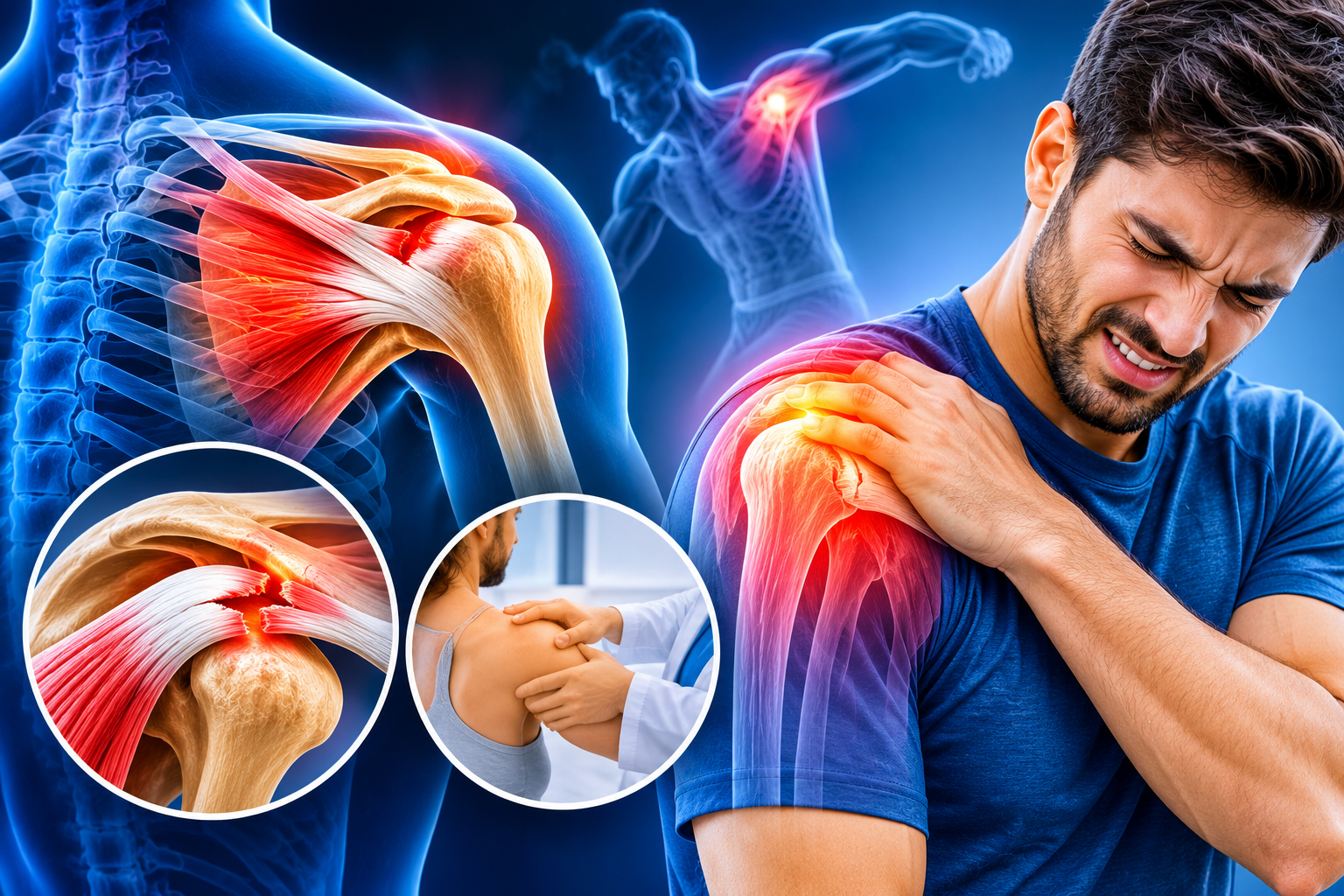
The rotator cuff is a group of four muscles and their tendons that help stabilize the shoulder joint and control arm movements. Injury or damage to these structures can cause pain, weakness and restricted shoulder movement.
Early evaluation and appropriate rehabilitation can help improve shoulder function and support recovery.
Dr. Prince Sain, BPT | MPT | MIAP, trained at SMS Hospital, focuses on personalized, patient-centered and non-surgical approaches to pain management and rehabilitation.
What Is a Rotator Cuff Injury?
The rotator cuff consists of four muscles:
Supraspinatus
Infraspinatus
Teres Minor
Subscapularis
These muscles and their tendons work together to stabilize the shoulder and allow movements such as lifting, rotating and reaching.
A rotator cuff injury may involve tendon irritation, degeneration or a partial or complete tear. The severity can vary from mild irritation to significant tendon damage.
Common Causes
Rotator cuff injuries may develop suddenly or gradually over time.
Repetitive Overhead Movements: Activities involving repeated lifting or reaching above the head may increase tendon stress.
Sports Activities: Swimming, tennis, badminton and throwing sports can place repeated demands on the shoulder.
Age-Related Changes: Tendons may become weaker and more vulnerable to injury with age.
Sudden Trauma: Falling on the arm or lifting a heavy object unexpectedly may cause a tear.
Occupational Strain: Jobs involving repetitive shoulder movements may contribute to tendon problems.
Poor Shoulder Mechanics: Certain movement patterns may increase stress on the rotator cuff.
Symptoms of Rotator Cuff Injury
Common symptoms include:
Pain around the shoulder, especially while lifting the arm.
Weakness during lifting or reaching activities.
Difficulty reaching behind the back.
Pain while sleeping on the affected shoulder.
Clicking or discomfort during shoulder movement.
Reduced range of motion.
Difficulty performing daily activities.
Symptoms depend on the type and severity of the injury.
How Is It Diagnosed?
A healthcare professional may recommend the following assessments:
1. Medical History
Understanding when the pain started, previous injuries and activities that increase discomfort.
2. Physical Examination
Assessing shoulder movement, muscle strength, tenderness and joint function.
3. Clinical Shoulder Tests
Specific movements and resistance tests may help identify which rotator cuff structures are affected.
4. Imaging Tests
Ultrasound or MRI may be recommended to evaluate tendon damage. X-rays may help identify associated bone or joint changes.
Non-Surgical Treatment Options
Many rotator cuff problems can initially be managed with conservative treatment, depending on the type and severity of the injury.
1. Physiotherapy
A structured physiotherapy programme may help improve shoulder mobility, muscle control and functional strength.
2. Activity Modification
Temporarily reducing painful overhead activities and heavy lifting may help manage symptoms.
3. Strengthening Exercises
Progressive exercises targeting the rotator cuff and shoulder blade muscles can improve shoulder stability and function.
4. Mobility Exercises
Gentle, guided exercises may help maintain shoulder movement and reduce stiffness.
5. Pain Management
Appropriate pain-relief strategies may be recommended following individual assessment.
6. Rehabilitation
A gradual rehabilitation programme helps patients return to their daily activities and sports safely.
Large or traumatic tears, particularly when associated with significant weakness, may require early specialist evaluation and consideration of surgical treatment.
Exercises That May Support Recovery
Depending on the injury, a physiotherapist may recommend:
Gentle shoulder mobility exercises.
Pendulum exercises.
Controlled external rotation exercises.
Shoulder blade stabilization.
Progressive resistance training.
Exercises should be selected according to the patient's condition and tolerance.
When Should You Consult a Specialist?
Seek professional evaluation if:
Shoulder pain continues for several weeks.
You experience weakness while lifting your arm.
Shoulder movement becomes restricted.
Pain regularly interrupts sleep.
Symptoms begin after a fall or sudden injury.
Daily activities become difficult.
Sudden severe pain, deformity or inability to raise the arm following an injury requires prompt medical assessment.
Conclusion
Rotator cuff injuries can affect shoulder strength, movement and everyday activities. Early diagnosis and a suitable treatment plan are important for managing symptoms and restoring function.
Physiotherapy, activity modification, progressive strengthening and appropriate pain management can help many patients with non-surgical recovery.
Dr. Prince Sain focuses on personalized, patient-centered care to help individuals manage musculoskeletal pain and improve physical function through appropriate rehabilitation approaches.
Frequently Asked Questions
Q1. Can a rotator cuff injury heal without surgery?
Many mild and moderate rotator cuff problems can improve with conservative treatment. However, some significant tears may require surgical evaluation.
Q2. What is the most common symptom of a rotator cuff injury?
Shoulder pain during lifting or overhead movements, often accompanied by weakness, is a common symptom.
Q3. Is physiotherapy helpful for rotator cuff injuries?
Yes. A suitable physiotherapy programme can help improve shoulder mobility, strength and functional movement.
Q4. Can I exercise with a rotator cuff injury?
Some exercises may be appropriate, but activities that significantly increase pain should be modified. Follow a professionally guided programme.
Q5. How long does rotator cuff recovery take?
Recovery depends on the severity of the injury, treatment approach and individual healing response. It may take several weeks or months.
← Back to all blogs
Early evaluation and appropriate rehabilitation can help improve shoulder function and support recovery.
Dr. Prince Sain, BPT | MPT | MIAP, trained at SMS Hospital, focuses on personalized, patient-centered and non-surgical approaches to pain management and rehabilitation.
What Is a Rotator Cuff Injury?
The rotator cuff consists of four muscles:
Supraspinatus
Infraspinatus
Teres Minor
Subscapularis
These muscles and their tendons work together to stabilize the shoulder and allow movements such as lifting, rotating and reaching.
A rotator cuff injury may involve tendon irritation, degeneration or a partial or complete tear. The severity can vary from mild irritation to significant tendon damage.
Common Causes
Rotator cuff injuries may develop suddenly or gradually over time.
Repetitive Overhead Movements: Activities involving repeated lifting or reaching above the head may increase tendon stress.
Sports Activities: Swimming, tennis, badminton and throwing sports can place repeated demands on the shoulder.
Age-Related Changes: Tendons may become weaker and more vulnerable to injury with age.
Sudden Trauma: Falling on the arm or lifting a heavy object unexpectedly may cause a tear.
Occupational Strain: Jobs involving repetitive shoulder movements may contribute to tendon problems.
Poor Shoulder Mechanics: Certain movement patterns may increase stress on the rotator cuff.
Symptoms of Rotator Cuff Injury
Common symptoms include:
Pain around the shoulder, especially while lifting the arm.
Weakness during lifting or reaching activities.
Difficulty reaching behind the back.
Pain while sleeping on the affected shoulder.
Clicking or discomfort during shoulder movement.
Reduced range of motion.
Difficulty performing daily activities.
Symptoms depend on the type and severity of the injury.
How Is It Diagnosed?
A healthcare professional may recommend the following assessments:
1. Medical History
Understanding when the pain started, previous injuries and activities that increase discomfort.
2. Physical Examination
Assessing shoulder movement, muscle strength, tenderness and joint function.
3. Clinical Shoulder Tests
Specific movements and resistance tests may help identify which rotator cuff structures are affected.
4. Imaging Tests
Ultrasound or MRI may be recommended to evaluate tendon damage. X-rays may help identify associated bone or joint changes.
Non-Surgical Treatment Options
Many rotator cuff problems can initially be managed with conservative treatment, depending on the type and severity of the injury.
1. Physiotherapy
A structured physiotherapy programme may help improve shoulder mobility, muscle control and functional strength.
2. Activity Modification
Temporarily reducing painful overhead activities and heavy lifting may help manage symptoms.
3. Strengthening Exercises
Progressive exercises targeting the rotator cuff and shoulder blade muscles can improve shoulder stability and function.
4. Mobility Exercises
Gentle, guided exercises may help maintain shoulder movement and reduce stiffness.
5. Pain Management
Appropriate pain-relief strategies may be recommended following individual assessment.
6. Rehabilitation
A gradual rehabilitation programme helps patients return to their daily activities and sports safely.
Large or traumatic tears, particularly when associated with significant weakness, may require early specialist evaluation and consideration of surgical treatment.
Exercises That May Support Recovery
Depending on the injury, a physiotherapist may recommend:
Gentle shoulder mobility exercises.
Pendulum exercises.
Controlled external rotation exercises.
Shoulder blade stabilization.
Progressive resistance training.
Exercises should be selected according to the patient's condition and tolerance.
When Should You Consult a Specialist?
Seek professional evaluation if:
Shoulder pain continues for several weeks.
You experience weakness while lifting your arm.
Shoulder movement becomes restricted.
Pain regularly interrupts sleep.
Symptoms begin after a fall or sudden injury.
Daily activities become difficult.
Sudden severe pain, deformity or inability to raise the arm following an injury requires prompt medical assessment.
Conclusion
Rotator cuff injuries can affect shoulder strength, movement and everyday activities. Early diagnosis and a suitable treatment plan are important for managing symptoms and restoring function.
Physiotherapy, activity modification, progressive strengthening and appropriate pain management can help many patients with non-surgical recovery.
Dr. Prince Sain focuses on personalized, patient-centered care to help individuals manage musculoskeletal pain and improve physical function through appropriate rehabilitation approaches.
Frequently Asked Questions
Q1. Can a rotator cuff injury heal without surgery?
Many mild and moderate rotator cuff problems can improve with conservative treatment. However, some significant tears may require surgical evaluation.
Q2. What is the most common symptom of a rotator cuff injury?
Shoulder pain during lifting or overhead movements, often accompanied by weakness, is a common symptom.
Q3. Is physiotherapy helpful for rotator cuff injuries?
Yes. A suitable physiotherapy programme can help improve shoulder mobility, strength and functional movement.
Q4. Can I exercise with a rotator cuff injury?
Some exercises may be appropriate, but activities that significantly increase pain should be modified. Follow a professionally guided programme.
Q5. How long does rotator cuff recovery take?
Recovery depends on the severity of the injury, treatment approach and individual healing response. It may take several weeks or months.
