20 November 2026
IT Band Syndrome: Causes and Treatment
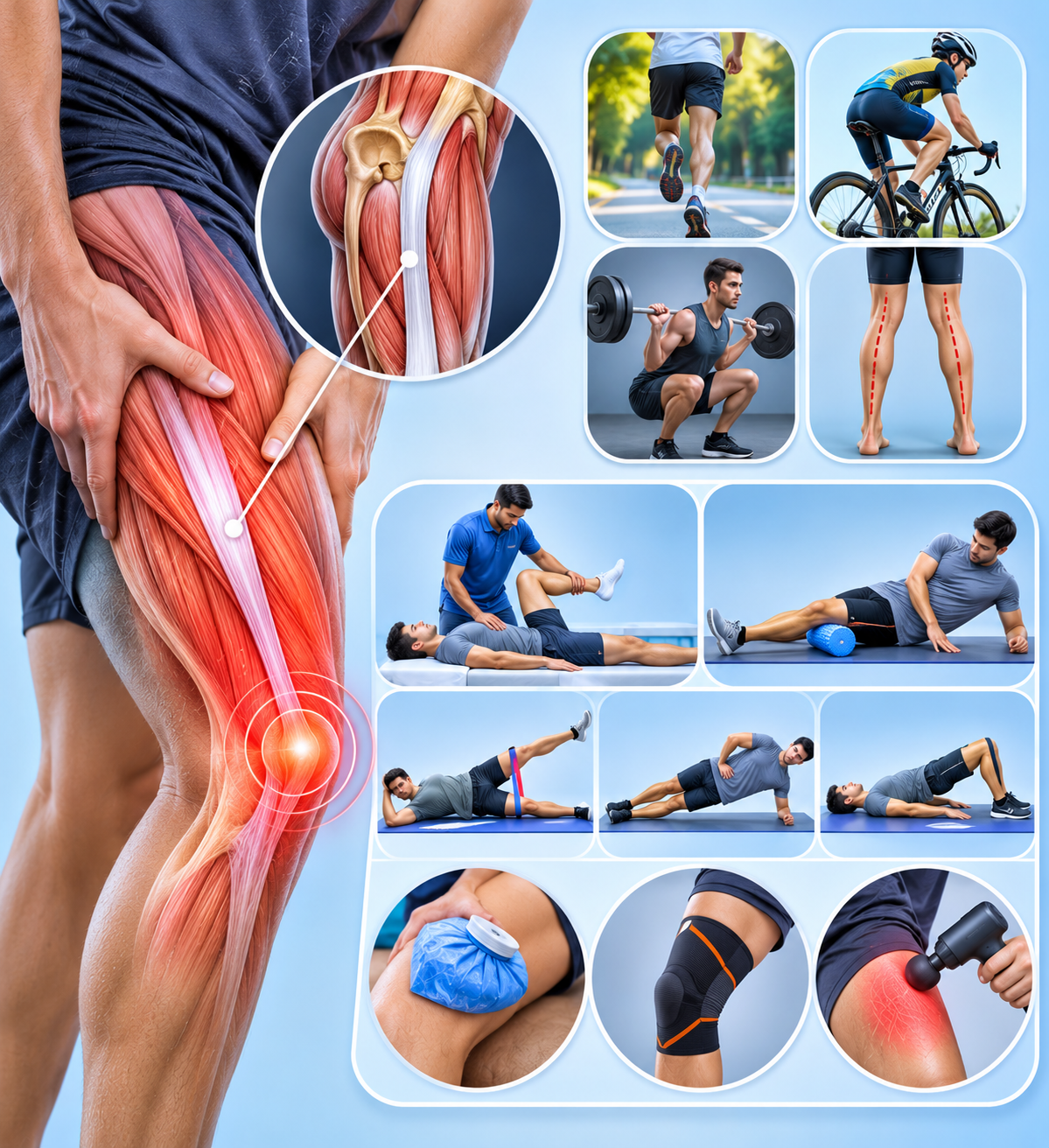
IT band syndrome, also known as iliotibial band syndrome, is a common overuse condition that causes pain along the outer side of the knee. The iliotibial band is a thick band of connective tissue that runs from the hip down to the outer side of the knee.
This condition is frequently seen in runners, cyclists and individuals involved in repetitive lower-body activities. Repeated knee movement and training-related stress can contribute to irritation around the outer knee.
Early assessment and appropriate rehabilitation can help reduce discomfort and improve movement.
Common Causes of IT Band Syndrome
Several factors may contribute to the development of IT band syndrome:
Sudden increase in running distance or exercise intensity.
Repetitive knee bending during running or cycling.
Weakness in hip and gluteal muscles.
Inadequate recovery between workouts.
Training on uneven or sloped surfaces.
Poor lower-limb movement mechanics.
Previous overuse injuries.
Symptoms of IT Band Syndrome
Common symptoms include:
Pain on the outer side of the knee.
Discomfort during running or cycling.
Pain that increases with repetitive knee movement.
Tenderness around the outer knee.
Discomfort while walking downhill or climbing stairs.
Symptoms that improve with rest but return during activity.
In some individuals, pain may also be felt along the outer thigh.
How Is IT Band Syndrome Diagnosed?
A proper assessment may include:
1. Medical History: Understanding exercise routines, training intensity and the onset of symptoms.
2. Physical Examination: Checking tenderness, knee movement and surrounding muscle strength.
3. Movement Assessment: Evaluating walking, running mechanics and hip stability.
4. Imaging Tests: Ultrasound or MRI may be recommended when symptoms are unusual, persistent or another knee condition needs to be ruled out.
Non-Surgical Treatment Options
Treatment generally focuses on reducing irritation, improving muscle function and correcting contributing movement patterns.
1. Activity Modification
Temporarily reducing activities that trigger pain can help control excessive stress on the affected area.
2. Physiotherapy
A personalized rehabilitation programme may include hip strengthening, gluteal muscle exercises, flexibility training and movement correction.
3. Strengthening Exercises
Improving hip and pelvic muscle control can help support better lower-limb movement during physical activities.
4. Pain Management
Appropriate pain-relief measures may be recommended after evaluating the patient's condition and medical history.
5. Gradual Return to Sports
Running and cycling should be resumed progressively according to symptoms, strength and functional recovery.
Tips to Prevent IT Band Syndrome
Increase exercise intensity gradually.
Include hip and gluteal strengthening exercises.
Warm up before running or cycling.
Allow sufficient recovery between workouts.
Avoid sudden changes in training surfaces.
Pay attention to early signs of outer knee pain.
Conclusion
IT band syndrome can interfere with running, cycling and everyday movement. Identifying the contributing factors and following a structured rehabilitation programme can help reduce discomfort and improve knee function.
Dr. Prince Sain, BPT, MPT, MIAP, trained at SMS Hospital, provides personalized, patient-centered, non-surgical pain management and rehabilitation approaches for sports injuries and musculoskeletal conditions.
Frequently Asked Questions
1. What is the main cause of IT band syndrome?
It commonly develops due to repetitive knee movement and overuse, particularly during running and cycling.
2. Where is IT band pain felt?
Pain is usually experienced on the outer side of the knee and may sometimes extend along the outer thigh.
3. Can IT band syndrome improve without surgery?
Most cases are managed non-surgically through activity modification, physiotherapy and appropriate strengthening exercises.
4. Is running safe with IT band syndrome?
Running may aggravate symptoms. Activity should be modified until pain improves, followed by a gradual return based on professional guidance.
5. When should I consult a specialist?
Consult a healthcare professional if outer knee pain persists, worsens or interferes with walking and physical activity.
← Back to all blogs
Early assessment and appropriate rehabilitation can help reduce discomfort and improve movement.
Common Causes of IT Band Syndrome
Several factors may contribute to the development of IT band syndrome:
Sudden increase in running distance or exercise intensity.
Repetitive knee bending during running or cycling.
Weakness in hip and gluteal muscles.
Inadequate recovery between workouts.
Training on uneven or sloped surfaces.
Poor lower-limb movement mechanics.
Previous overuse injuries.
Symptoms of IT Band Syndrome
Common symptoms include:
Pain on the outer side of the knee.
Discomfort during running or cycling.
Pain that increases with repetitive knee movement.
Tenderness around the outer knee.
Discomfort while walking downhill or climbing stairs.
Symptoms that improve with rest but return during activity.
In some individuals, pain may also be felt along the outer thigh.
How Is IT Band Syndrome Diagnosed?
A proper assessment may include:
1. Medical History: Understanding exercise routines, training intensity and the onset of symptoms.
2. Physical Examination: Checking tenderness, knee movement and surrounding muscle strength.
3. Movement Assessment: Evaluating walking, running mechanics and hip stability.
4. Imaging Tests: Ultrasound or MRI may be recommended when symptoms are unusual, persistent or another knee condition needs to be ruled out.
Non-Surgical Treatment Options
Treatment generally focuses on reducing irritation, improving muscle function and correcting contributing movement patterns.
1. Activity Modification
Temporarily reducing activities that trigger pain can help control excessive stress on the affected area.
2. Physiotherapy
A personalized rehabilitation programme may include hip strengthening, gluteal muscle exercises, flexibility training and movement correction.
3. Strengthening Exercises
Improving hip and pelvic muscle control can help support better lower-limb movement during physical activities.
4. Pain Management
Appropriate pain-relief measures may be recommended after evaluating the patient's condition and medical history.
5. Gradual Return to Sports
Running and cycling should be resumed progressively according to symptoms, strength and functional recovery.
Tips to Prevent IT Band Syndrome
Increase exercise intensity gradually.
Include hip and gluteal strengthening exercises.
Warm up before running or cycling.
Allow sufficient recovery between workouts.
Avoid sudden changes in training surfaces.
Pay attention to early signs of outer knee pain.
Conclusion
IT band syndrome can interfere with running, cycling and everyday movement. Identifying the contributing factors and following a structured rehabilitation programme can help reduce discomfort and improve knee function.
Dr. Prince Sain, BPT, MPT, MIAP, trained at SMS Hospital, provides personalized, patient-centered, non-surgical pain management and rehabilitation approaches for sports injuries and musculoskeletal conditions.
Frequently Asked Questions
1. What is the main cause of IT band syndrome?
It commonly develops due to repetitive knee movement and overuse, particularly during running and cycling.
2. Where is IT band pain felt?
Pain is usually experienced on the outer side of the knee and may sometimes extend along the outer thigh.
3. Can IT band syndrome improve without surgery?
Most cases are managed non-surgically through activity modification, physiotherapy and appropriate strengthening exercises.
4. Is running safe with IT band syndrome?
Running may aggravate symptoms. Activity should be modified until pain improves, followed by a gradual return based on professional guidance.
5. When should I consult a specialist?
Consult a healthcare professional if outer knee pain persists, worsens or interferes with walking and physical activity.
